
Share Georgette Magassy (Magassy) Dorn's obituary with others.
Invite friends and family to read the obituary and add memories.
Stay updated
We'll notify you when service details or new memories are added.
You're now following this obituary
We'll email you when there are updates.
Select your format and elements to print

IN LOVING MEMORY OF Georgette Magassy (Magassy) Dorn
Georgette Magassy
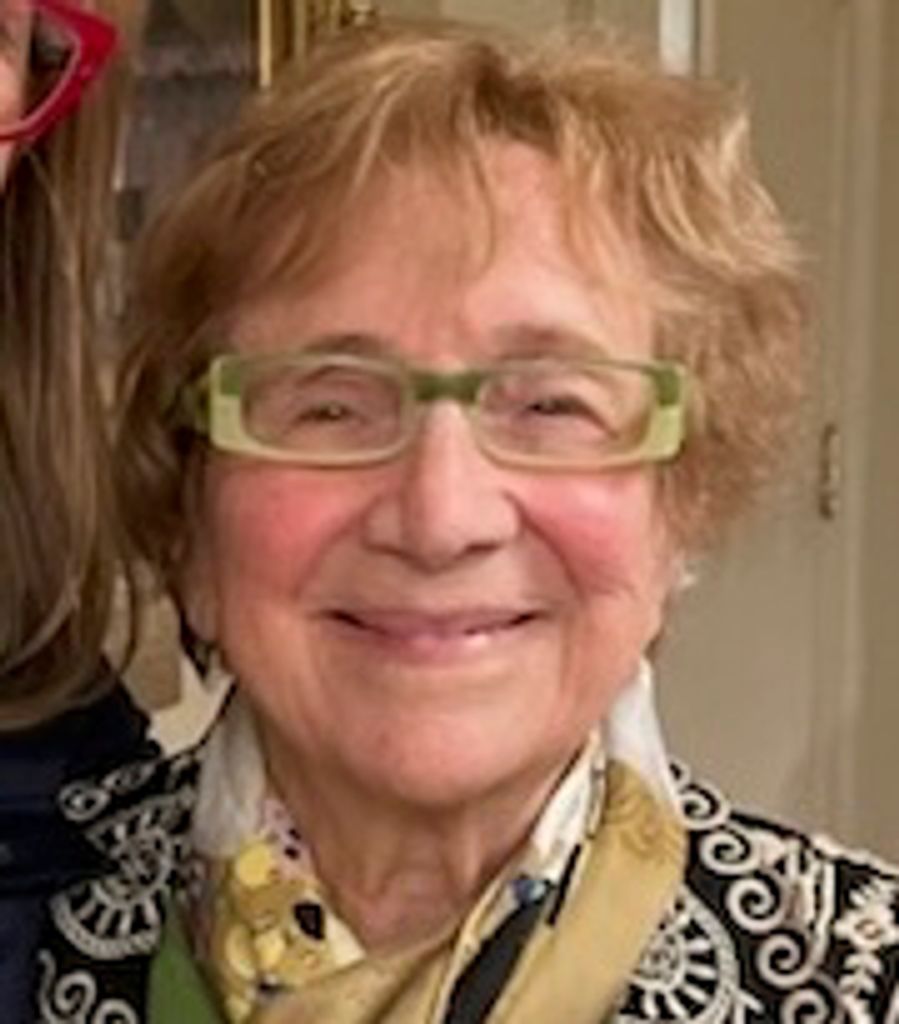
(Magassy) Dorn
Aug 13, 1934 — Apr 20, 2026
West Roxbury
Georgette Magassy (Magassy) Dorn's Obituary
To view Georgette's Funeral Mass Via Live Stream, click the link below.
Georgette Magassy Dorn (b. August 13, 1934) was a widely influential Latin Americanist librarian and scholar whose career at the Library of Congress was exceptional, not just for her length of service, but for her leadership, productivity, and dedication to area studies. With an historian's commitment to shedding light on the past and a librarian's desire to preserve cultural and intellectual materials for future generations, she led efforts to enrich and expand the Library's Luso-Hispanic collections and make them accessible to all. She had the unflagging energy, and, as important, the unwavering confidence, required to meet the omnipresent challenges of managing a Library of Congress reading room, then a division, then two divisions simultaneously. Throughout her tenure, her appreciation and enthusiasm for the Library of Congress never wavered. As Georgette often liked to tell visitors and new employees, "every day is different; every day is an opportunity to learn something new about the Library and its unsurpassed collections."
Born in Budapest, Hungary shortly before WWII to Dr. Gabriel Luis Magassy and Georgette Gyorko Magassy, she spent several years of her childhood with her parents and brother in a displaced persons camp, later part of the British Occupation Zone, in Germany. In 1950, she began a new phase of her life in Buenos Aires, Argentina where her father had secured a position as a physician. There she became fluent in Spanish and learned English under the tutelage of nuns at the convent school where she completed her secondary education. When a chance to emigrate to the United States emerged, the family willingly seized the opportunity, although it meant shifting to a new country and culture yet again. In 1956, Georgette and her brother enrolled at Creighton University in Omaha, Nebraska, where she completed her bachelor's degree, before accepting a fellowship to earn her Master's at Boston College. In Boston, Georgette met Paul Austin Dorn. After marrying, they moved to Washington DC where Paul attended medical school and opened an ophthalmology practice. Together they raised four children, Paul Gabriel, Susan, Elizabeth, and Georgette (Gigi), and remained married for 51 years until Paul's death in 2013.
In DC, Georgette began working almost immediately, first as an editor in Georgetown University's School of Linguistics and Languages. A chance meeting with Donald J.S. Stewart, then the editor of the Handbook of Latin American Studies, led to an introduction to Howard Cline, then chief of the Library's Hispanic Division, and an opportunity to work with him researching Spanish land grants for the US Justice Department and to assist with his ethnohistorical projects. In 1964, Georgette became head of the Hispanic Reading Room and, in 1969, with characteristic stamina, she also took on curatorial responsibilities for the Archive of Hispanic Literature on Tape (today, the PALABRA Archive), a collection of audio recordings of writers reading from their works. If that were not enough, at the urging of Cline, Georgette began to pursue a PhD in history at Georgetown University in the mid-1970s, completing her degree in 1981. From 1982-2002, she was a professorial lecturer in the History Department and the Center for Latin American Studies at Georgetown University. She taught one of the first courses on Women in Latin American History and a course on Race, Class, and Gender in Latin America.
Of this time in her career, Georgette said, in an interview with Barbara Tenenbaum published in the The Americas (80:2, April 2023), that while all her work was important to her, "I feel that my most lasting contribution remains my effort to vastly increase the Archive of Hispanic Literature on Tape (AHLOT) from 232 poets and prose writers in 1969 to 790 over the course of my association with it." Over the years, Georgette recorded an astonishing 500 writers either at the Sound Laboratory of the Library of Congress or at locations abroad. She was an avid reader herself and among her favorite writers were Mario Vargas Llosa, Carmen Laforet, Nicanor Parra, Pablo Neruda, Julio Cortázar, José Donoso, and Jorge Luis Borges. She had a chance to interview and record Borges for the Archive when he visited the Library of Congress in 1976.
Georgette had an encyclopedic mind and could hold forth on not only the work of literary greats, but on seemingly any aspect of history, current affairs, or politics. A decisive woman of firm opinions, her workplace style revealed her personal interest in her staff. She could deliver a swift verdict on a recent international event, then pivot and offer a compliment on a new scarf or inquire about a new baby or the health of a parent. She appreciated an incisive mind and good story and would reward the latter with a sudden, quick laugh. She was remarkably adept at navigating the bureaucratic challenges of a large institution, often relying on a personal connection to disarm, soothe, or persuade: an invitation to lunch, a coffee, a brief sit-down meeting were her stock-in-trade. More often than not, she was successful largely because her curiosity about the Library and interest in her colleagues' work was genuine. As a result, her institutional knowledge of the Library of Congress was unparalleled. This became especially important when Georgette was named Chief of the Hispanic Division in April 1994. From 2005 to early 2017, she was also Acting Chief of the European Division. She recognized the importance of forging intra- and inter-institutional relationships to smooth the path for new and ongoing projects and to draw attention to the work and collections of the Library of Congress.
She regularly "crossed the street" to charlar with members of the Congressional Hispanic Caucus. For many years under Georgette's leadership, the Hispanic Division hosted the annual publication of the Anuario Hispano Yearbook, drawing businesspeople, military officials, diplomatic staff, Congressional staff and others to toast the successes of Hispanic businesses and organizations. For twenty-five years, the Américas Award for Children's and Young Adult Literature held its awards ceremony at the Library, bringing in teachers and school children from across the District. The annual Maratón de Poesía del Teatro de la Luna celebrating local poets also found a home at the Library thanks to Georgette. At the Winter Holiday Party in the Hispanic Reading Room, Georgette drew together staff from across the Library and a connected community of patrons, scholars, contributors to the Handbook of Latin American Studies for a now legendary annual celebration.
In addition to these splashier events, Georgette nurtured and supported the work of individual scholars, writers, musicians and others. Over the years, she helped organize countless lectures, symposia, exhibits and displays, and concerts with scholars, members of the diplomatic community, and officials of foreign governments. She worked with the Lampadia Foundation to establish a program for librarians from Argentina and Chile to spend an extended time at the Library and bring their acquired expertise back to their home institutions. In fact, it is not an exaggeration to say that while Georgette was chief, hundreds of high school, undergraduate, and graduate students found temporary employment and fulfilled internship requirements in the Hispanic Reading Room. Georgette modeled the importance of speaking multiple languages and learning about other cultures. She helped spark the careers of new generations of Latin Americanists: former interns joined the staff of the Hispanic Division, and many others now hold reference, curatorial, and leadership roles in libraries and universities across the country.
During her own career, Georgette played a crucial role in expanding the Library's Luso-Hispanic collections. She directed the work of staff who recommended the Library acquire rare books and manuscripts from across the Americas, tens of thousands of monographs, photographs, maps, and more. She played a pivotal role in assisting then Librarian James H. Billington to acquire the important Jay I. Kislak Collection on the Cultures and History of the Americas. During her tenure, she also oversaw a variety of innovative projects. In collaboration with a Spanish organization, Fundación Histórica TAVERA, the first 49 print volumes of the Handbook of Latin American Studies were converted to digital format. A web site to provide access to more recent Handbook volumes was also developed. Under Georgette's leadership, the Division created popular online exhibits related to the Spanish-American War and the Mexican Revolution, initiated the digitization of the PALABRA Archive, began the compilation of the print and later the digital exhibition Hispanic-Americans in Congress, launched the Library's first podcast, La Biblioteca, and joined the Library's other area studies units to share information about the international collections in the Four Corners blog.
Georgette herself researched numerous bibliographies of works at the Library of Congress and was an occasional contributor to the Handbook of Latin American Studies. As a member of the American Historical Association (AHA), the Seminar on the Acquisition of Latin American Library Materials (SALALM), the Latin American Studies Association (LASA), the International Institute of Iberia-American Literature, and other organizations, she presented papers at numerous conferences in the United States, Latin America, and Europe. She is the author of many articles on the history and culture of Latin America. And she served on the board of the journal The Americas. She prepared a facsimile translation of "The Indian Tribes of Texas" by José Francisco Ruiz (1783-1840) and acted as associate editor of "The Encyclopedia of Latin American History and Culture" (1996), published in four volumes.
For her work within the field of Luso-Hispanic studies, Georgette was awarded the Order of Queen Isabella from Spain, which is bestowed on foreigners who promote the research and dissemination of Spanish culture, and the Distinguished Service Award from the Conference on Latin American History (CLAH).
When Georgette retired from the Library of Congress in 2018 after more than 50 years of service, she had seen many changes in technology and the tools available to organize and access the Library's collections. She believed, though, that the true power of libraries lay not in ever-changing technologies, but in the relationships, both fleeting and long-term, between librarians, curators, and archivists who are the temporary caretakers of the collections and the readers who seek their guidance. She believed in the value of maintaining a physical space where readers and librarians could meet and exchange ideas. In her words, "there can be no history without libraries and their collections."
Please don't send flowers. Instead consider a donation, no matter how small, to one or more of these organizations. My mother was an immigrant and clearly understood that the greatness of this country came from the backs and efforts of those who came here.
A Mass of Christian Burial will be celebrated in St. Ignatius of Loyola Church, 28 Commonwealth Ave, Chestnut Hill on Saturday May 9, at 10:00 am. Relatives and friends are invited to attend. Interment St. Joseph Cemetery West Roxbury.
To view Georgette's Funeral Mass Via Live Stream, click the link below.
Funeral Services for Georgette Magassy (Magassy) Dorn

Georgette Magassy (Magassy) Dorn's Guestbook
Visits: 158
This site is protected by reCAPTCHA and the
Google Privacy Policy and Terms of Service apply.
Service map data © OpenStreetMap contributors